
Robert ASPINALL 先生が4月18日のシンポジウムにご登壇されます!
Internationalisation of Education in Japan
– Policies, Practices, and Impact
April 18, 2026 / 09:30 – 17:30
Symposium at the Keio University, Tokyo
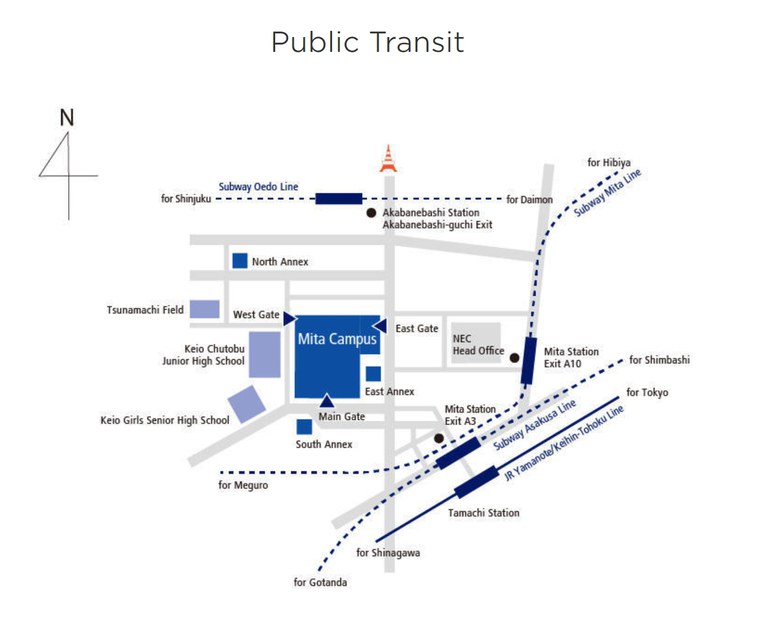
Large conference room, the 3rd floor of North Building, Mita Campus, Keio University
https://www.keio.ac.jp/en/maps/mita.html
Organizers: Steve R. ENTRICH, University of Zurich & Visiting Researcher Keio University
Matthias HENNINGS, Kwansei Gakuin University
Hirohisa TAKENOSHITA, Keio University
Since the collapse of the economic bubble in the early 1990s, Japan has faced prolonged economic stagnation, demographic decline, and growing social inequality. Once characterized as a sōchūryū shakai (general middle-class society), Japan is increasingly described as a kakusa shakai, marked by widening disparities and labour market insecurity. Against this backdrop, internationalisation (kokusaika) has emerged as a central policy response aimed at revitalizing the economy, enhancing global competitiveness, and addressing structural labour shortages. At the core of these efforts lies the cultivation of transnational human capital (THC)—including language proficiency, intercultural competencies, and international experience enabling individuals to operate across national contexts.
Since the 2010s, major policy initiatives such as the Go Global Japan Project and the Top Global University Project have promoted outbound mobility, English-medium instruction, and institutional international partnerships. At the same time, immigration reforms have expanded pathways for international students and highly skilled workers. While these developments have produced measurable growth in mobility and international student inflows, the broader societal implications of educational internationalisation remain insufficiently understood.
This symposium addresses this gap by bringing together empirically grounded research on the internationalisation of education in Japan, structured around three analytical dimensions: policies, practices, and impact. First, contributions examine how internationalisation is conceptualized, justified, and contested in policy discourse. Second, they analyse how these policies are translated into institutional practices within schools, universities, and transnational education–migration infrastructures. Third, they explore the societal and individual consequences of these processes, including their implications for inequality, labour market integration, and life-course trajectories.
Drawing on perspectives from sociology, education, migration studies, and political economy, the symposium highlights both the opportunities and the tensions inherent in Japan’s internationalisation agenda. Particular attention is paid not only to intended outcomes—such as skill formation and employability—but also to unintended consequences, including stratification, precarity, and exclusion across different social groups.
By integrating these perspectives, the symposium provides a comprehensive and critical account of how internationalisation reshapes the relationship between education, migration, and labour in contemporary Japan. The contributions will be published in a forthcoming volume in the Routledge Studies in Education and Society in Asia series, contributing to broader comparative debates on globalization, education, and social transformation.
Program
09:00 – 09:30
Registration
09:30 – 09:35
Welcome address
Hirohisa TAKENOSHITA (Keio University)
09:35 – 10:30
Keynote: The Internationalisation of Education in Japan
Steve R. ENTRICH (University of Zurich & Keio Visiting Researcher)
Matthias HENNINGS (Kwansei Gakuin)
10:30 – 11:00
Coffee Break
11:00 – 12:30
Session 1: Internationalisation Policies – Discourses, Agendas, and Reception
Examines how internationalisation is framed in policy, language reform, and educational discourse, and how these agendas are perceived and negotiated by learners.
The Wall of Language: English Language Policy and the Limits of Educational Internationalisation
Robert ASPINALL (Doshisha University)
The institutionalizing of international education policy as a labour migration pathway: Analysing four decades of policymaking in Japan
Maximilian Xavier REHM (Doshisha University)
The Path to Global Readiness: Learner Perceptions of Internationalisation Policies in Japanese Education
Christopher SAMUELL (Kyoto Institute of Technology)
12:30 – 14:00
Lunch Break
14:00 – 15:00
Session 2: Internationalisation Practices – Institutions, Programs, and Lived Experiences
Focuses on how internationalisation is implemented in practice, highlighting institutional arrangements and the everyday experiences of participants within globalised education.
Reproductive Justice for International Students: Gendered Challenges and Policy Gaps
Masako TANAKA (Sophia University)
LGBTQ+ Participants in the JET Programme: Belonging and Exclusion
Kazuyoshi KAWASAKA (The University of Tokyo)
Ami KOBAYASHI (Rheinland-Pfälzische Technische Universität Kaiserslautern Landau)
15:00 – 15:30
Coffee Break
15:30 – 17:00
Session 3: Internationalisation Outcomes – Mobility, Labour Markets, and Inequality
Explores the societal impact of internationalisation, focusing on education–migration linkages, labour market integration, and the reproduction of social inequalities.
The Education-Migration Industry: From Language Students to Skilled Workers?
Anh Phuong LE (Waseda University)
Bridging Borders: The Role of Chinese Juku in Educational Mobility and Labor Integration
Denny Qingzhe CHEN (Kyoto University)
Labour Market Outcomes of Highly Skilled International Graduates: Realities and Gaps
Mayumi MOCHIZUKI (Osaka University)
Xin YAO (Osaka University)
17:00 – 17:30
Concluding Remarks
18:00 – 20:00
Dinner